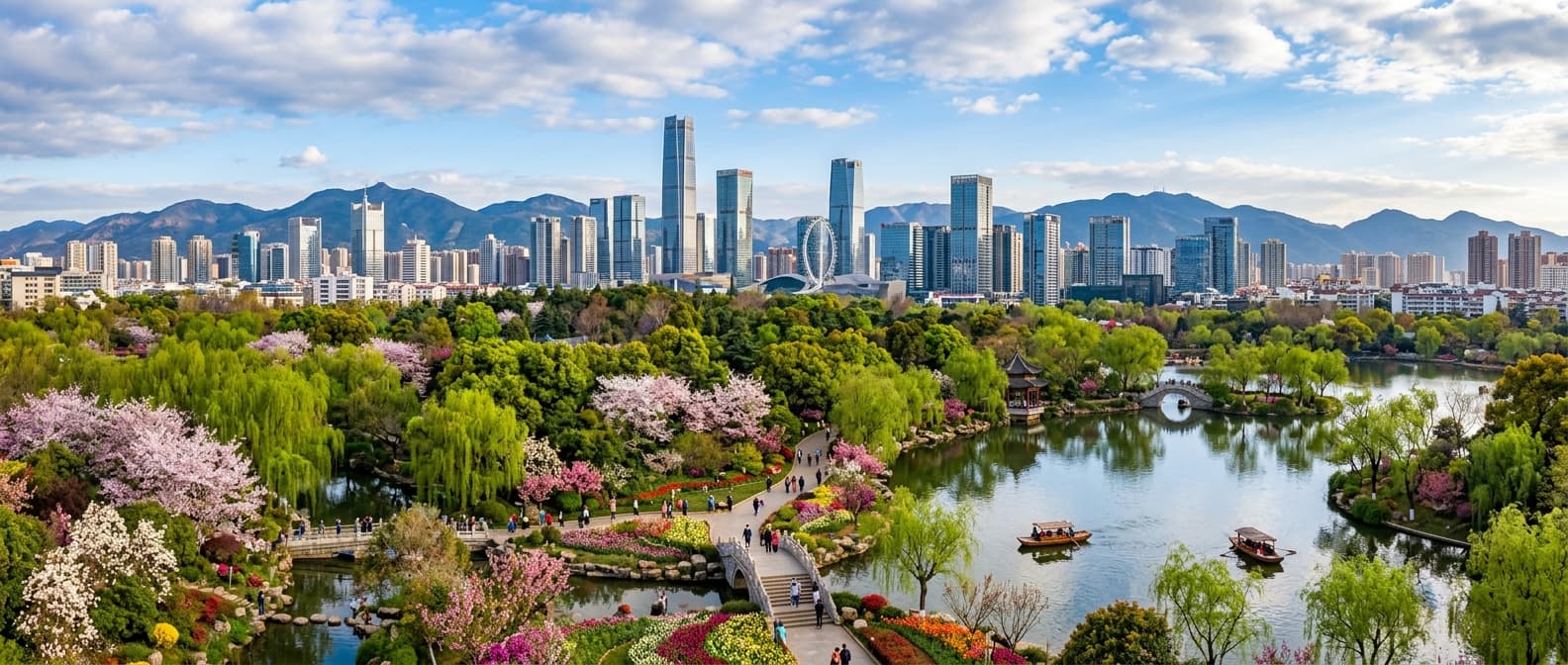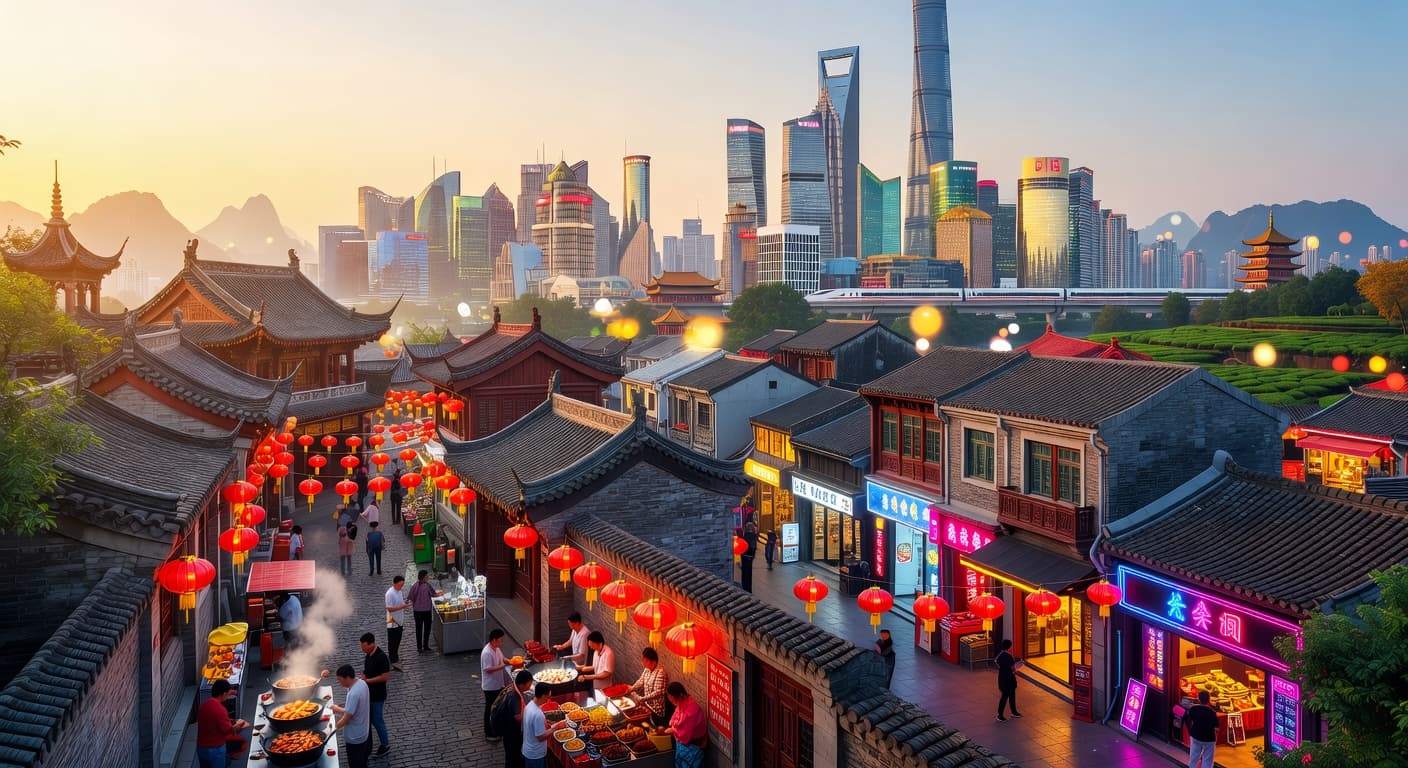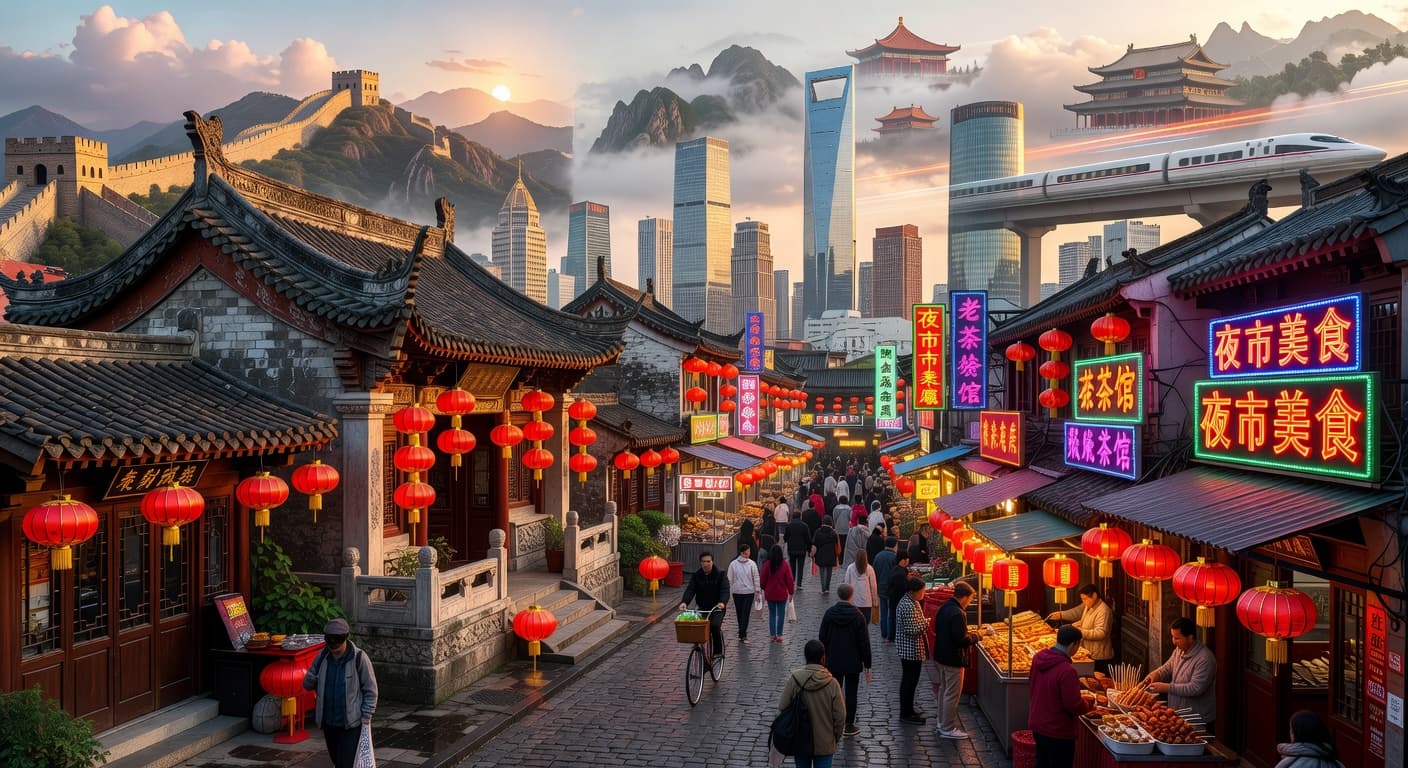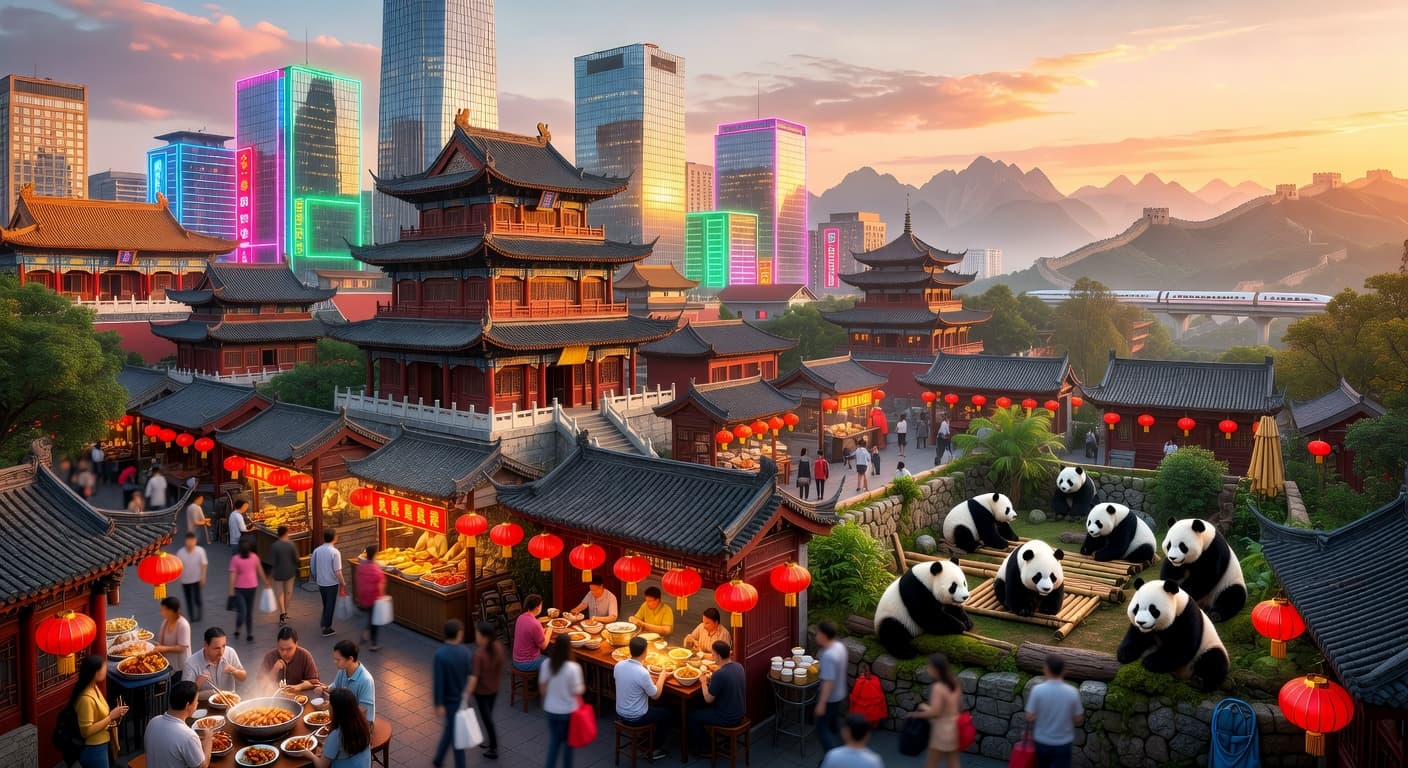
Discover Chengdu: cuddle giant pandas, explore ancient temples, and taste fiery Sichuan cuisine. Complete guide with itineraries and insider tips.
Chengdu isn't just another Chinese city—it's where giant pandas munch bamboo in the morning and you're eating numbing, fiery mapo tofu by evening. This laid-back capital of Sichuan Province has become one of China's most magnetic destinations, blending wildlife encounters with some of the most addictive food culture you'll experience anywhere in the country. When we spent time exploring Chengdu's neighborhoods, we found a city that moves at its own pace, where locals linger over tea in ancient teahouses and street food vendors command queues that wrap around corners.
Key Takeaways
| Question | Answer |
|---|---|
| What is the best time to visit? | Spring (March-May) and autumn (September-November) offer ideal weather; avoid summer heat and winter fog |
| How much does it cost? | Budget: ¥200-400/day ($28-56 USD); Mid-range: ¥500-1000/day ($70-140 USD); Luxury: ¥1500+/day ($210+ USD) |
| How do I get there? | Fly into Chengdu Shuangliu International Airport; high-speed rail from Beijing (12 hours), Shanghai (10 hours), or Chongqing (2 hours) |
| Is it safe? | Very safe; Chengdu ranks among China's safest cities with excellent public transportation and tourist infrastructure |
| What should I book in advance? | Giant Panda Base tickets (especially weekends), cooking classes, and accommodation during peak season (April-May, September-October) |
| What's the local vibe? | Relaxed, food-obsessed, tea-loving; locals are known for their easygoing attitude and pride in Sichuan cuisine |
| Do I need Chinese language skills? | Basic Mandarin helps; major attractions have English signage; download translation apps for restaurants |
1. Why Chengdu Deserves Your Time: Beyond the Pandas
Chengdu has exploded onto China's travel map in the last decade, but it's not a manufactured tourist destination—it's a genuine city that happens to have pandas. The city sits at the heart of the Southwest China region guide, a gateway to Sichuan's mountains, and a living museum of Chinese culture where ancient traditions coexist with modern urban energy.
What makes Chengdu different from Beijing or Shanghai is the absence of hustle. People here actually sit down. They drink tea for hours. They debate the merits of different chili varieties with the intensity others reserve for politics. During our time in Chengdu, we noticed locals would spend entire afternoons in teahouses, cards in hand, seemingly unbothered by the passage of time—a refreshing contrast to the frenetic pace of China's coastal megacities.
The Panda Factor
The Giant Panda Base (Chengdu Research Base of Giant Panda Breeding) is the primary reason most travelers come, and rightfully so. This isn't a zoo—it's a legitimate conservation facility where you can observe pandas in semi-natural settings. The experience of watching a 100kg panda delicately strip bamboo leaves, or seeing cubs tumble over each other in play, creates an almost meditative moment that justifies the trip alone.
The Food Obsession
But here's what surprised us: the pandas are actually the second reason to visit. The first is the food. Sichuan cuisine isn't just spicy—it's a complete philosophy involving numbing sensations from Sichuan peppercorns, layered heat, and bold flavor combinations that challenge your palate in the best way. We've eaten mapo tofu, dan dan noodles, and hot pot in other cities, but Chengdu is where these dishes taste like home cooking—because they are.
Did You Know? Chengdu is home to over 20,000 restaurants, earning it the nickname "China's Food Capital." The city has more Michelin-recommended establishments per capita than any other inland Chinese city.
Source: China Daily
2. Getting to Chengdu: Transportation Options
Chengdu Shuangliu International Airport is modern, efficient, and well-connected. If you're coming from outside China, you'll likely fly here directly—the airport handles flights from major Asian hubs and increasingly from North America and Europe. The airport is about 16km from the city center, roughly a 30-minute journey depending on traffic.
By Air
International flights arrive at Terminal 1 or 2. The airport express bus (¥16/$2.25) runs to the city center every 15-20 minutes, or you can take a taxi (¥60-80/$8-11) or use ride-hailing apps like Didi. We recommend the airport express if you're not in a rush—it's cheap, reliable, and you'll see your first glimpses of Chengdu's landscape.
By High-Speed Rail
The more scenic and often cheaper option is high-speed rail. Chengdu Railway Station connects to Beijing (12 hours, ¥500-800/$70-110), Shanghai (10 hours, ¥400-700/$56-98), and most importantly, Chongqing (2 hours, ¥100-150/$14-21). The high-speed rail experience itself is worth the journey—smooth, punctual, and you get views of rural Sichuan that flights skip entirely.
Book trains, buses across China easily online. Compare routes and prices.
Book Transport on 12Go → Scan me
3. Neighborhoods: Where to Stay and Explore
Chengdu's layout is relatively straightforward once you understand the ring roads. The city expands in concentric circles, with the Jinjiang District forming the historic heart and newer developments pushing outward.
Jinjiang District (锦江区) – The Historic Heart
Compare hotels across China with free cancellation on most bookings.
Search Hotels on Booking.com → Scan me
This is where you'll find the Wuhou Shrine, teahouses, and the old city's character. The neighborhood around Kuanzhai Xiangzi (Wide and Narrow Alley) is the most touristy but genuinely charming—Ming and Qing dynasty architecture, restored courtyards, and street food vendors. When we walked through Kuanzhai at dusk, lanterns were lighting up, locals were settling into teahouses, and the smell of grilling skewers filled the air. It's touristy, yes, but authentically so.
Where to stay: Budget guesthouses and mid-range hotels cluster here. You're paying for location and atmosphere.
Chenghua District (成华区) – The Modern Center
Home to the Giant Panda Base and the newer commercial district. This is where you'll find modern shopping malls, business hotels, and the city's contemporary energy. Less atmospheric than Jinjiang, but more convenient for accessing attractions and restaurants.
Where to stay: Chain hotels, business hotels, and modern boutique properties dominate here.
Tianfu New Area (天府新区) – The Future
Chengdu's ambitious new development zone, still under construction but increasingly important. Unless you're specifically interested in seeing China's urban planning in action, skip this for your first visit.
Qingyang District (青羊区) – The Spiritual Side
Home to Wenshu Monastery and the quieter, more contemplative side of Chengdu. Wenshu Monastery is an active Buddhist temple with a vegetarian restaurant, teahouse, and genuine spiritual atmosphere. This neighborhood feels removed from the city's commercial energy.
Where to stay: Fewer tourist hotels, but excellent value and authentic local experience.
Compare hotels across China with free cancellation on most bookings.
Search Hotels on Booking.com →
Scan me
4. Must-See Attractions: Pandas, Temples, and History
The Giant Panda Base (成都基地大熊猫繁殖研究)
This is the main event. The facility spans 75 hectares and houses over 100 giant pandas—the world's largest captive panda population. The base is divided into several zones: the panda enclosures (where you'll see pandas eating, sleeping, and occasionally doing absolutely nothing), the red panda area, and the breeding research center.
Pro tip: Arrive early—ideally by 8:30 AM. Pandas are most active in the morning, and crowds are manageable. By 10 AM, the place becomes a sea of selfie sticks. Admission is ¥55 ($7.50) for adults. The base is about 10km north of the city center; take metro line 1 to Panda Base Station, then a short bus ride.
During our visit, we spent three hours here and could have stayed longer. Watching a mother panda play with her cub, or seeing a massive male panda attempt to climb a tree and fail spectacularly, creates moments that no photo can fully capture.
Wuhou Shrine (武侯祠)
This is Chengdu's most important historical site—a temple dedicated to Zhuge Liang, the legendary strategist of the Three Kingdoms period. The shrine sits in a lush garden setting with ancient trees, stone tablets, and a museum documenting this crucial period of Chinese history. The architecture is stunning, and the atmosphere is peaceful despite being in the city center.
Admission: ¥50 ($7). Allow 1.5-2 hours. The shrine is accessible via metro line 1 (Wuhou Shrine Station). We recommend hiring a guide here (¥100-150/$14-21 for 2 hours) because the historical context transforms the experience from "nice temple" to "understanding a pivotal moment in Chinese civilization."
Wenshu Monastery (文殊院)
An active Buddhist monastery in the Qingyang District, Wenshu is less touristy than Wuhou Shrine but equally atmospheric. The monastery has been operating since the Tang Dynasty, and you'll see monks in robes, genuine worshippers making offerings, and a vegetarian restaurant serving simple, delicious food. The teahouse here is excellent—sit in the courtyard with a cup of jasmine tea and watch the world move slowly.
Admission: ¥5 ($0.70). This is one of Chengdu's best-kept secrets. Most tourists skip it for the Panda Base, which means you'll have the place largely to yourself.
Jinsha Museum (金沙遗址博物馆)
If you're interested in ancient Sichuan civilization, the Jinsha Museum showcases artifacts from a 3,000-year-old settlement. The museum's centerpiece is a massive bronze sun disk—an iconic symbol of Chengdu. The building itself is architecturally striking, built around the actual archaeological site.
Admission: ¥80 ($11). Allow 2 hours. This is more niche than the Panda Base, but if you're spending 3+ days in Chengdu, it's worth a visit.
Book Great Wall tours, cooking classes, and experiences in advance with instant confirmation.
Browse Activities on Klook → Scan me
5. Sichuan Food: The Culinary Main Event
Here's the honest truth: you didn't come to Chengdu for the temples. You came for the food. Sichuan cuisine is one of China's eight great culinary traditions, and Chengdu is its beating heart. The defining characteristic is the combination of heat (from chilies) and numbing sensation (from Sichuan peppercorns), creating a complex flavor profile that's addictive and challenging.
Essential Sichuan Dishes to Try
Mapo Tofu (麻婆豆腐) – Silken tofu in a spicy, numbing sauce with ground pork. The "ma" (麻) means numbing; the "la" (辣) means spicy. This dish is the gateway drug to Sichuan cuisine. We had it at a tiny hole-in-the-wall restaurant in Kuanzhai Xiangzi, and it was better than any fancy version we've tried elsewhere.
Dan Dan Noodles (担担面) – Hand-pulled noodles with sesame paste, chili oil, and a numbing sauce. The name comes from the bamboo pole (dan dan) street vendors used to carry the noodles and sauce. Street versions (¥8-12/$1-2) are often better than restaurant versions.
Chongqing Chicken (重庆鸡) – Diced chicken stir-fried with dried chilies, peanuts, and Sichuan peppercorns. It's intensely spicy and absolutely worth the mouth burn. Order it "mild" (wei la) your first time, or you'll spend the meal chugging water.
Hot Pot (火锅) – This is the social eating experience. You get a bubbling broth (choose spicy or mild), and you cook raw ingredients at your table—thinly sliced meat, vegetables, noodles, mushrooms. Hot pot is as much about the experience as the food. We went with locals who taught us the proper technique for cooking different ingredients and which dipping sauces work best.
Kung Pao Chicken (宫保鸡丁) – Kung Pao chicken originated in Sichuan. Diced chicken with peanuts, dried chilies, and a slightly sweet sauce. It's less numbing than other Sichuan dishes, making it a good introduction if you're heat-sensitive.
Where to Eat
Street Food and Casual Spots:
- Kuanzhai Xiangzi (宽窄巷子) – The restored alley is lined with food stalls and small restaurants. It's touristy, but the food is legitimate. Prices are ¥15-40 ($2-6) per dish. Go in the evening when the atmosphere is best.
- Huimin Street (宽窄巷子) – A pedestrian street packed with street food vendors. This is where locals eat. Expect to spend ¥30-50 ($4-7) for a full meal.
- Shuangliu District Night Market – If you want to feel like a local, head to one of Chengdu's night markets. The food is cheap (¥5-15/$0.70-2 per item), authentic, and the energy is electric.
Mid-Range Restaurants:
- Chen Mapo Tofu (陈麻婆豆腐) – The original mapo tofu restaurant, operating since 1862. It's famous, so expect crowds, but the food justifies the wait. Main dishes: ¥30-60 ($4-8).
- Sichuan restaurants in Jinjiang District – Walk down any street in the historic center and you'll find dozens of excellent, unpretentious Sichuan restaurants. Point at what other tables are eating if you can't read the menu.
Upscale Dining:
- Chengdu has a growing fine dining scene, but honestly, the best Sichuan food happens in casual settings. Save your money for quantity and variety rather than fancy plating.
Did You Know? Sichuan peppercorns (花椒) don't actually contain capsaicin like chili peppers. Instead, they contain hydroxy-alpha sanshool, which triggers touch receptors in your mouth, creating a numbing, tingling sensation called "ma la" (麻辣).
Source: China Daily
Cooking Classes
Several operators offer hands-on Sichuan cooking classes where you'll learn to make mapo tofu, dan dan noodles, and other classics. Classes typically last 3-4 hours, include a market visit, and cost ¥250-400 ($35-56). This is an excellent way to deepen your understanding of the cuisine's philosophy and techniques.
6. Tea Culture: The Slower Side of Chengdu
If food is Chengdu's first love, tea is its meditation practice. The city has thousands of teahouses, ranging from ancient establishments with wooden furniture and elderly regulars to modern cafes with Wi-Fi. Chengdu's tea culture is deeply embedded in daily life—locals don't just drink tea; they gather around it.
Traditional Teahouses
Book Great Wall tours, cooking classes, and experiences in advance with instant confirmation.
Browse Activities on Klook →
Scan me
Wenshu Monastery Teahouse (文殊院茶馆) – Sitting in the courtyard of an active Buddhist monastery with a cup of oolong tea is one of Chengdu's most serene experiences. Prices: ¥15-30 ($2-4) for tea, ¥10-20 ($1.50-3) for snacks.
Heming Teahouse (鹤鸣茶馆) – Operating since 1923, Heming is an institution. It's in People's Park, surrounded by locals playing cards and mahjong. The atmosphere is authentically Chengdu—no tourists, no pretense. Tea: ¥10-20 ($1.50-3).
Kuanzhai Xiangzi Teahouses – Multiple teahouses line the restored alley. They're more touristy but still pleasant, especially in the evening. Prices are slightly higher (¥20-40/$3-6) but you're paying for ambiance and location.
Tea Varieties
Chengdu is particularly known for Emei Mountain tea (峨眉茶) and Mengding tea (蒙顶茶), both grown in nearby mountains. These are green teas with a delicate, slightly sweet flavor. If you want to bring tea home, the tea markets in Chengdu offer excellent quality at reasonable prices—far better than airport shops.
When we visited a tea market in the Qingyang District, a vendor spent 30 minutes explaining the differences between various Emei teas, brewing samples for us to taste. This kind of patient education is standard in Chengdu's tea culture.
7. Day Trips: Beyond the City Center
Leshan Giant Buddha (乐山大佛)
About 160km south of Chengdu, the Leshan Giant Buddha is one of China's most impressive sculptures—a 71-meter-tall Buddha carved into a cliff face during the Tang Dynasty. The site sits at the confluence of three rivers, and the scale is genuinely breathtaking. You can view it from across the river (free) or climb down to the Buddha's feet (¥90/$12.50 admission).
Getting there: Take a bus from Chengdu's Xinnanmen Bus Station (2 hours, ¥40-60/$6-8). This is a full-day trip—budget 8-10 hours including travel time. The experience is worth it; the Buddha is more impressive in person than any photo suggests.
Emei Mountain (峨眉山)
One of China's four sacred Buddhist mountains, Emei is about 150km from Chengdu. The mountain is famous for its temples, scenic views, and wild monkeys. You can hike to the summit (3,099m) or take cable cars for portions of the journey. Most people spend 1-2 days here.
Getting there: Bus from Xinnanmen Bus Station (2-3 hours, ¥50-80/$7-11) to Emei town, then local transport up the mountain. This requires more planning than a day trip, but it's one of Southwest China's most beautiful areas.
Jiuzhaigou Valley (九寨沟)
About 400km north of Chengdu, Jiuzhaigou is a UNESCO World Heritage site famous for turquoise lakes, waterfalls, and forests. It's stunning but requires 2-3 days and is best visited as part of a longer Southwest China region itinerary rather than a day trip from Chengdu.
8. Where to Stay: Neighborhoods and Recommendations
Budget Options (¥100-250/$14-35 per night)
Chengdu has excellent budget accommodations. Hostels cluster in Kuanzhai Xiangzi and around the Panda Base. Quality is generally high—you'll get clean rooms, decent amenities, and often a social atmosphere. Budget hotels in Qingyang District offer even better value if you don't need the social scene.
Mid-Range (¥300-800/$42-110 per night)
This is where Chengdu shines. You can get a comfortable, well-appointed hotel in a great location for less than you'd pay for a basic room in Beijing or Shanghai. Look for properties in Jinjiang District (historic, walkable) or Chenghua District (modern, convenient).
Luxury (¥1000+/$140+ per night)
Chengdu has several excellent luxury hotels, though the city doesn't have the ultra-high-end properties you'd find in Shanghai. The Raffles, Waldorf Astoria, and several five-star properties offer excellent service and facilities.
Specific Recommendations
Budget: Hostels in Kuanzhai Xiangzi offer private rooms and dorms. Quality varies, so read recent reviews.
Mid-range: Look for boutique hotels in the historic Jinjiang District. You'll pay slightly more than chain hotels but gain character and location.
Luxury: The Raffles Chengdu offers five-star service with excellent Sichuan cuisine and spa facilities.
Book accommodation in advance during peak season (March-May, September-October). Outside these periods, you can often negotiate rates, especially for mid-range and luxury properties.
Compare car rental prices across China. Pick up at airports or city locations with flexible cancellation.
Compare Car Rentals →
Scan me
9. Practical Information: Getting Around and Staying Connected
Public Transportation
Metro: Chengdu's metro system is modern, clean, and expanding. Lines 1, 2, 3, and 4 cover most tourist areas. A single journey costs ¥2-7 ($0.30-1) depending on distance. Get a metro card (¥20/$3 with ¥10 credit) at any station—it's faster than buying individual tickets.
Buses: Extensive but confusing for non-Chinese speakers. Stick to the metro when possible.
Taxis: Abundant and cheap (¥8-15/$1-2 for most in-city journeys). Use Didi (the Chinese Uber equivalent) for easier payment and no language barriers.
Bicycles: Chengdu has bike-sharing systems (Mobike, Ofo). ¥1-2 ($0.15-0.30) per ride. The city is relatively flat and bike-friendly, especially in the historic districts.
Money and Payments
Compare car rental prices across China. Pick up at airports or city locations with flexible cancellation.
Compare Car Rentals →
Scan me
China is increasingly cashless. WeChat Pay and Alipay are accepted everywhere—restaurants, shops, taxis, temples. You'll need a Chinese bank account or international card linked to these apps. ATMs are abundant if you need cash. The exchange rate is roughly ¥7 = $1 USD (check current rates).
Internet and Communication
Download a VPN before arriving if you need access to Western websites. WeChat is essential—it's used for messaging, payments, and accessing many services. Get a local SIM card at the airport (¥50-100/$7-14 with data) or use an eSIM service.
Get a China eSIM before you land. Some plans include VPN access.
Get Saily eSIM for China → Scan me
Language
English is less widely spoken in Chengdu than in Beijing or Shanghai. Download Google Translate (works offline for camera translation) and a Chinese keyboard app. Learning a few basic phrases in Mandarin (hello, thank you, how much) goes a long way with locals.
Safety
Chengdu is very safe. Petty theft is rare, violent crime is virtually non-existent, and the police are helpful. Use standard urban precautions (don't flash expensive items, be aware of surroundings at night), but overall, you can walk around confidently.
10. Sample Itineraries: Making the Most of Your Time
1-Day Itinerary (If You're Passing Through)
Morning (8:00 AM - 12:00 PM): Giant Panda Base. Arrive early, spend 2-3 hours observing pandas. Take metro line 1 to Panda Base Station.
Lunch (12:00 PM - 1:30 PM): Street food near the Panda Base or head back to Kuanzhai Xiangzi for mapo tofu.
Afternoon (2:00 PM - 5:00 PM): Kuanzhai Xiangzi. Walk the restored alley, explore shops, drink tea in a teahouse.
Evening (5:00 PM - 8:00 PM): Dinner at a Sichuan restaurant. Try hot pot or dan dan noodles. Explore the night market if you have energy.
Night (8:00 PM+): Rest or explore the city's nightlife (Chengdu has excellent bars and clubs, though they're not the main draw).
3-Day Itinerary (Recommended Minimum)
Day 1:
- Morning: Giant Panda Base (arrive 8:30 AM)
- Lunch: Street food near the base
- Afternoon: Wuhou Shrine and museum
- Evening: Dinner in Jinjiang District, explore Kuanzhai Xiangzi, tea in a traditional teahouse
Day 2:
- Morning: Wenshu Monastery and teahouse experience
- Lunch: Vegetarian food at the monastery or nearby restaurants
- Afternoon: Jinsha Museum or shopping in Chengdu's commercial districts
- Evening: Cooking class (if booked) or casual dinner exploring different Sichuan dishes
Day 3:
- Full day: Day trip to Leshan Giant Buddha (early start, return evening) OR spend the day exploring different neighborhoods, markets, and teahouses
- Evening: Final dinner, packing, preparation for departure
This itinerary balances the main attractions (pandas, temples) with the food and tea culture that make Chengdu unique. You'll have time to eat well, move slowly, and actually experience the city rather than just checking boxes.
We may earn a small commission from bookings made through our links, at no extra cost to you. This helps us keep creating free travel guides.
Frequently Asked Questions
How much does it cost to visit the Giant Panda Base?
Admission is ¥55 ($7.50) for adults. The base is open 7:30 AM - 6:00 PM daily. Budget an additional ¥30-50 ($4-7) for transportation from the city center via metro and bus. Arriving early (before 9 AM) significantly improves your panda-viewing experience.
What's the best time to visit Chengdu?
Spring (March-May) and autumn (September-November) offer ideal weather—mild temperatures and low humidity. Summer (June-August) is hot and humid; winter (December-February) brings fog and occasional rain. Peak tourist season is April-May and September-October, so book accommodation in advance.
Can I do a cooking class in Chengdu?
Yes, several operators offer 3-4 hour Sichuan cooking classes including market visits. Classes cost ¥250-400 ($35-56) and are an excellent way to learn about the cuisine. Book through your hotel or local tour operators. Classes typically include lunch and take-home recipes.
Is Chengdu's food too spicy for me?
Sichuan cuisine is definitely spicy, but you can manage it. Order dishes "mild" (wei la) or "not spicy" (bu la). Stick with less intense dishes like kung pao chicken or noodle soups initially. Eat rice or bread to cool your mouth—water actually makes the burn worse. Most locals appreciate when foreigners try to enjoy the food on its own terms rather than avoiding it entirely.
How many days should I spend in Chengdu?
Three days is ideal—enough time for the Panda Base, major temples, multiple meals, and either a day trip or deeper exploration of neighborhoods. Two days is the minimum if you're on a tight schedule. A week would let you explore day trips like Leshan Buddha or Emei Mountain without rushing.
Do I need a visa to visit Chengdu?
Visa requirements depend on your nationality. Most visitors need a tourist visa for mainland China. Some nationalities qualify for visa-free entry or transit visas. Check with the Chinese embassy in your country well in advance—processing takes 4-6 weeks.
What's the best way to get from Chengdu to other cities?
High-speed rail is excellent. Chengdu connects to Beijing (12 hours), Shanghai (10 hours), and Chongqing (2 hours). Flights are available but high-speed rail is often cheaper, more comfortable, and offers better scenery. Book tickets through 12306.cn or at the station.
Conclusion
Chengdu is the rare destination that delivers on multiple fronts—genuine wildlife encounters with giant pandas, world-class cuisine that justifies a trip on its own, and a relaxed urban atmosphere that feels refreshingly different from China's coastal megacities. Whether you're a food enthusiast, wildlife lover, or simply seeking an authentic Chinese experience away from the typical tourist circuit, Chengdu rewards curiosity and time.
The city's strength lies in its refusal to be rushed. Spend an afternoon in a teahouse. Eat the same dish at three different restaurants to compare techniques. Wake up early to watch pandas. These aren't side activities—they're the point.
For more inspiration on exploring China's diverse regions, check out our Southwest China region guide, which covers Yunnan, Sichuan, and other provinces worth exploring. And if you're planning a longer China itinerary, our complete China travel guides can help you connect Chengdu with other must-see destinations.
Start planning your Chengdu adventure today. The pandas are waiting, and the food is calling.

About the Author
Go2China Team
The Go2China editorial team combines first-hand travel experience with deep cultural knowledge to bring you accurate, up-to-date guides for exploring China — from the Great Wall and Forbidden City to hidden gems off the tourist trail.
- ✓Lived and traveled extensively across China
- ✓Native & bilingual Mandarin speakers on team
- ✓Verified info from official Chinese tourism sources